This guide explains where to buy XRP, compares major platforms, explores alternative buying methods, and outlines safe, efficient ways to store your XRP.
XRP trades across global crypto markets, with most volume concentrated on large centralized exchanges.
These platforms support active spot trading, which keeps spreads tight and execution reliable for both small and large orders.
For most buyers, they provide the simplest option to buying XRP using bank transfers or cards.
Another option is the XRP Ledger which runs with very low network fees, but every new wallet must hold a small base reserve to remain active.
Some account features lock additional reserves, which reduces spendable balance.
Many exchanges also require a destination tag for deposits. If you send XRP without the correct tag you may lose access to your crypto.
Generally, the total cost of buying XRP will depend on the method you use. Order-book trading usually costs less than instant purchases, while OTC desks help large buyers avoid slippage and lock in pricing.
RECOMMENDED: How To Buy Ripple (XRP) In The USA
Where To Buy XRP in 2026
You can buy XRP using:
- centralized exchanges
- OTC desks
- decentralized markets on the XRP Ledger
- peer-to-peer platforms
- broker-style services
Let’s discuss each of these options in more detail below.
Centralized Exchanges (CEX)
Centralized exchanges handle most XRP trading worldwide. They use live order books that continuously match buyers and sellers, creating clear pricing and reliable liquidity.
These platforms also offer the widest access to fiat funding, including bank transfers and card payments, which makes them the most common starting point for new buyers.
Fees on centralized exchanges vary by trading volume, order type, and payment method. Spot trading with limit orders is usually the cheapest option.
Instant purchases are faster but more expensive. Withdrawal rules, minimums, and destination tag requirements differ between platforms, so it’s important to review these details before depositing funds.
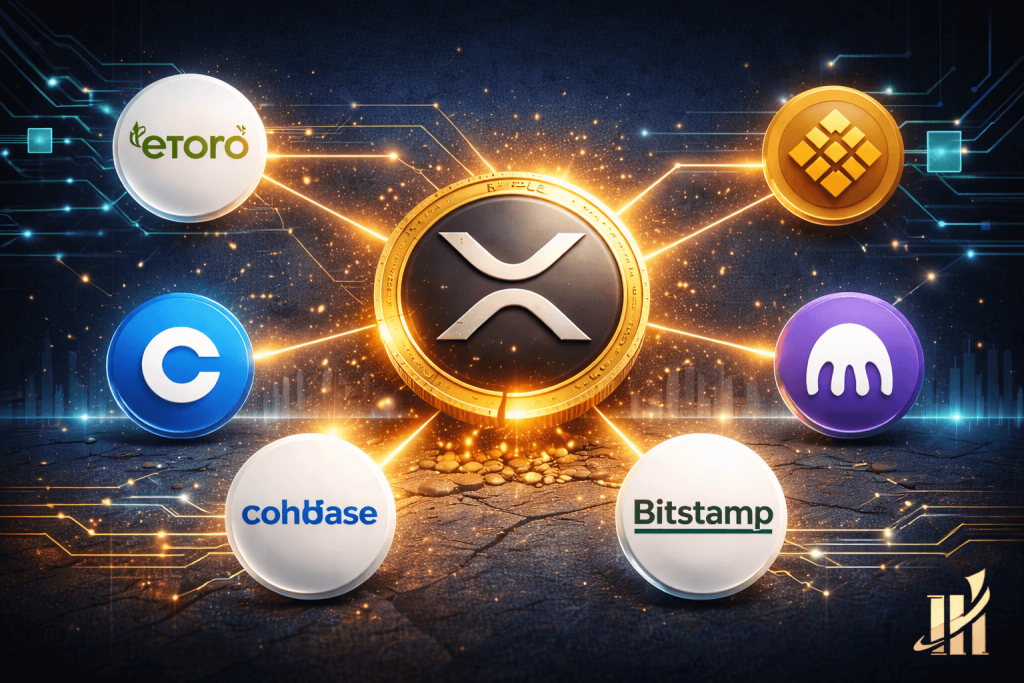
Below are some of the best centralized exchanges to buy XRP in 2026.
eToro
eToro provides XRP exposure through a custodial trading platform. It provides fiat funding, simple trade execution, and social trading features aimed at retail users who prioritize ease of use.
READ: eToro Review 2026: Is It Safe, Legit & Worth It?
Liquidity
- XRP pricing reflects underlying market liquidity
- Best suited for small to medium retail trades
Fees
- Spread-based pricing model
- Extra fees may apply for withdrawals and currency conversion
Pros
- Very simple onboarding process
- Supports bank and card deposits
- Social and copy trading tools
Cons
- Wider spreads than traditional spot exchanges
>>>>BUY XRP WITH eToro<<<<
RECOMMENDED: An In‑Depth Review of Buying XRP on eToro
Binance
Binance is a global exchange offering deep XRP order books, multiple trading pairs, and advanced tools, with features and availability depending on regional regulations.
Liquidity
- Among the deepest XRP spot markets globally
- Tight spreads on major trading pairs
Fees
- Tiered maker and taker fees
- Lower costs when using limit orders
- Higher fees for instant card purchases
Pros
- Strong liquidity for efficient execution
- Wide range of tools and trading pairs
- Suitable for active and large-volume traders
Cons
- Access varies by country
- Interface can feel complex for beginners
Coinbase
Coinbase is a regulated exchange offering XRP trading in supported regions. The platform is known for strong compliance, simple design, and reliable fiat access for eligible users.
Liquidity
- Consistent XRP liquidity on supported fiat pairs
- Institutional liquidity available through advanced platforms
Fees
- Retail trades include platform fees and spreads
- Lower fees available on advanced trading interfaces
Pros
- Clean, beginner-friendly interface
- Strong security and compliance standards
- Trusted fiat onramps
Cons
- XRP availability depends on location
- Retail fees are higher than some competitors
ALSO READ: 10 Regulated FCA-Approved Crypto Exchanges In The UK
Kraken
Kraken is a long-established exchange recognized for security and transparency. It offers XRP trading with multiple fiat options and a clear, volume-based fee structure.
Liquidity
- Stable liquidity across major fiat XRP pairs
- Reliable execution for medium-sized trades
Fees
- Tiered maker and taker fees
- Higher costs for instant buy options
Pros
- Strong security reputation
- Predictable fee schedules
- Broad support for bank transfers
Cons
- Instant purchase fees are relatively high
- Fewer advanced tools than some global platforms
>>>>BUY XRP WITH Kraken<<<<
Bitstamp
Bitstamp is a veteran exchange offering XRP trading with direct EUR and USD pairs. It focuses on simplicity, regulatory compliance, and steady fiat liquidity.
Liquidity
- Reliable liquidity on EUR and USD XRP pairs
- Well suited for European-focused traders
Fees
- Volume-based trading fee structure
- Competitive rates at higher monthly volumes
Pros
- Straightforward trading experience
- Strong fiat support for European users
- Long operational history
Cons
- Smaller global liquidity than larger exchanges
- Limited advanced trading features
RECOMMENDED: 10 Best Exchanges To Buy XRP in the USA Today
Other Ways To Buy XRP
While centralized exchanges are the most common ways to buy XRP, you can also acquire it using other options such as:
- OTC desks
- Decentralized markets on the XRP Ledger
- Broker-style platforms
- Peer-to-peer services
OTC Desks
OTC desks connect buyers and sellers directly without using public exchanges. They are used by institutions or high-net-worth individuals to purchase large XRP amounts without affecting market prices.
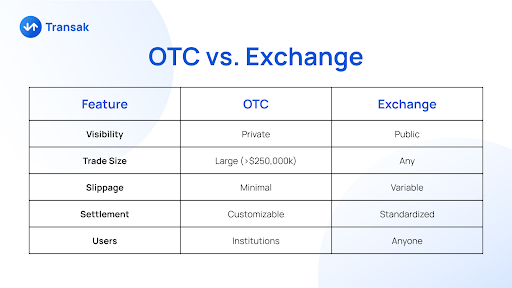
Desks provide a quoted price, handle execution, and often source liquidity from multiple exchanges. Settlement occurs via bank or crypto transfers, sometimes with custody services.
Full identity checks, minimum trade sizes, and formal terms are standard, offering more predictable pricing for large purchases.
Liquidity
- Deep liquidity for large block trades
- Orders often filled by aggregating multiple liquidity sources
Pros
- Very low slippage on large trades
- Private execution with custom settlement options
- Access to institutional-grade services
Cons
- High minimum trade sizes
- Strict onboarding and identity requirements
- Requires trusting the desk for settlement
XRPL Decentralized Exchange
The XRP Ledger features a built-in decentralized exchange (DEX) that settles trades directly on chain without intermediaries. Traders place buy and sell offers on ledger order books, making it ideal for users who control their own XRP or other XRPL tokens.
Here is an example trade on the XRPL DEX.
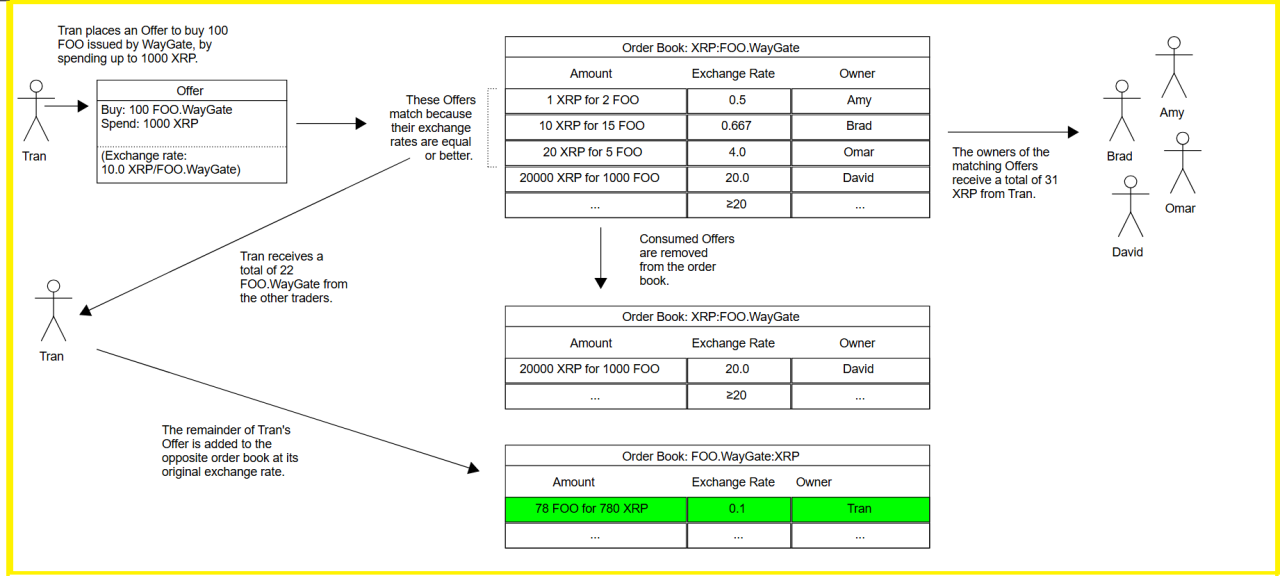
The DEX does not support direct fiat purchases, so users typically fund it with XRP or gateway-issued assets.
It requires managing trust lines and maintaining the account reserve, and liquidity can vary depending on the trading pair and market activity.
Liquidity
- Good for token swaps on the XRP Ledger
- Can be limited for XRP-to-fiat trades
Pros
- Trades settle directly on the ledger with full self-custody
- Order books are fully transparent
- Works well for XRPL tokens and automated trading
Cons
- Cannot buy directly with fiat
- Requires some technical knowledge of trust lines
- Less liquid markets can cause price slippage
Broker Platforms And Wallet Sellers
Broker platforms and custodial wallet apps let users buy XRP instantly using cards or bank transfers.
They set prices internally instead of relying on public order books, and transactions complete as soon as payment clears. This makes them fast and easy, appealing to new users or casual buyers.
However, brokers often charge wider spreads than exchanges and hold XRP on your behalf, meaning you don’t manage private keys and withdrawals depend on the provider. These platforms are best for small, quick purchases.
Liquidity
- Depends on provider inventory and partner exchanges
- Not linked to live market depth
Pros
- Fast, simple, and beginner-friendly
- Easy fiat funding within the app
- Good for small or occasional buys
Cons
- Higher cost due to spreads
- Provider controls funds and withdrawals
- Limits or delays may apply
RECOMMENDED: 10 Best Crypto Exchange in 2026
Peer-To-Peer Marketplaces
Peer-to-peer (P2P) marketplaces connect buyers and sellers directly, often supporting local payment methods such as bank transfers or mobile money. Most platforms use escrow to hold XRP during the transaction and display seller ratings to help users assess reliability.
P2P markets are especially useful in regions where exchanges offer limited fiat support. Prices depend on local demand and supply, so they can differ from global averages.
Liquidity
- Varies widely by region and currency
- Some local markets are active, others thin
Pros
- Access to local payment methods
- Useful where exchange support is limited
- Flexible options for local buyers
Cons
- Higher counterparty risk than exchanges
- Slower settlement due to payment clearing
- Requires careful seller verification
Fees, Spreads, And Hidden Costs To Watch When Buying XRP
When you buy XRP, you will incur various fees and costs. These include spreads, deposit and withdrawal charges, and optional OTC or instant purchase expenses.
Trading Fees
Order-book trades involve maker and taker fees, often based on your monthly trading volume. Larger traders can get lower rates, while small trades pay standard fees.
Instant Buy Costs
Buying XRP instantly with credit cards or in-app processors usually adds higher spreads and processing fees, typically between 0.5% and 3% on top of the market price.
Deposit And Withdrawal Fees
Exchanges may charge fees for deposits, fiat conversions, and withdrawals. Minimum withdrawal limits and recovery fees for missing destination tags can add extra costs.
Network Fees
The XRP Ledger itself charges minimal transaction fees. Most of the cost comes from the exchange’s withdrawal policy rather than the network.
OTC Costs
Over-the-counter purchases reduce visible market slippage for large orders but may include negotiation, settlement, and custody fees.
Tips to Reduce Costs
- Use limit orders when possible
- Consolidate trades to qualify for volume discounts
- Use bank transfers instead of cards
- Check withdrawal policies before moving large amounts
ALSO READ: 5 Best Crypto Exchanges in the UK for 2026
How To Store XRP Safely
After buying your XRP, ensure it is stored safely. The most common ways are using custodial exchange wallets, hardware wallets or software wallets.
Custodial Exchange Wallets
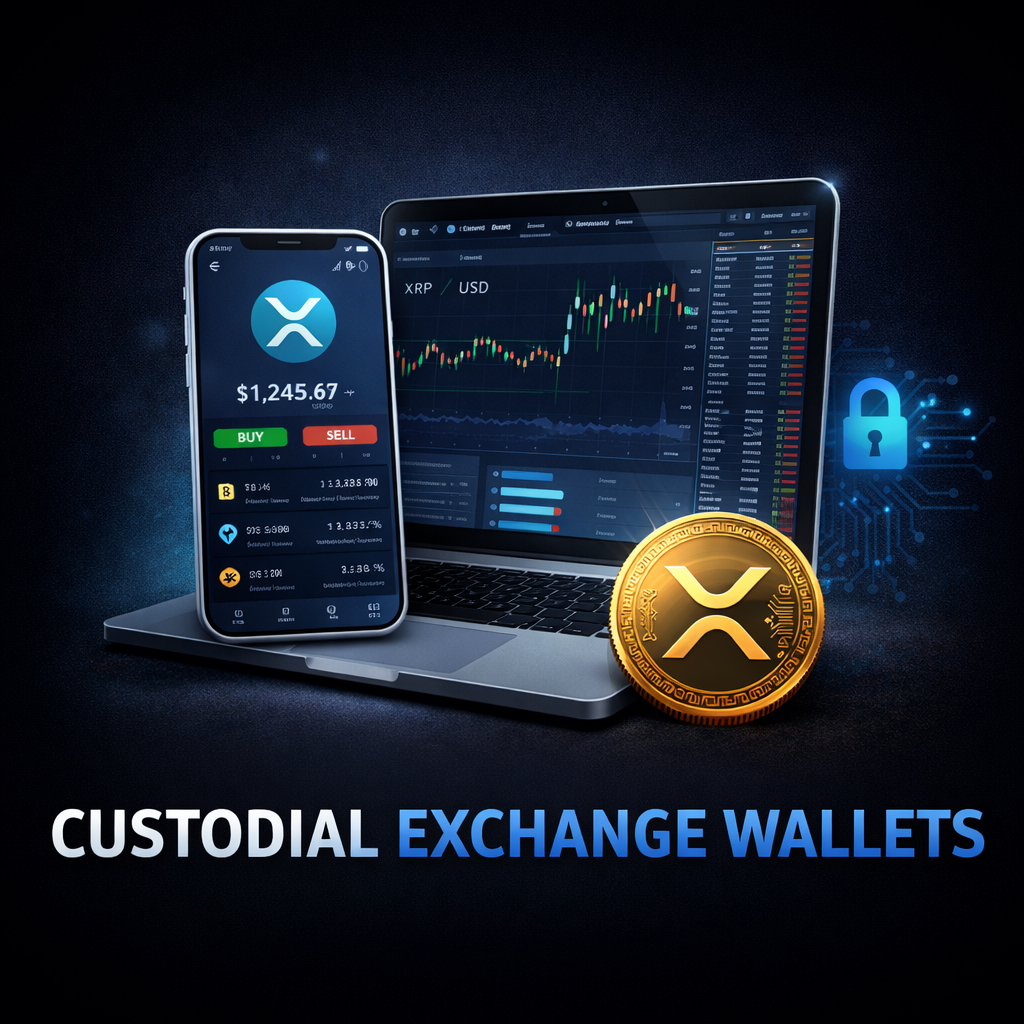
Custodial wallets store XRP on your behalf, on the exchange you bought it from. They manage private keys for you, and focus on trading speed rather than direct user control.
Examples
- Binance
- Coinbase
- Kraken
- Bitstamp
Software Wallets (Self Custody)
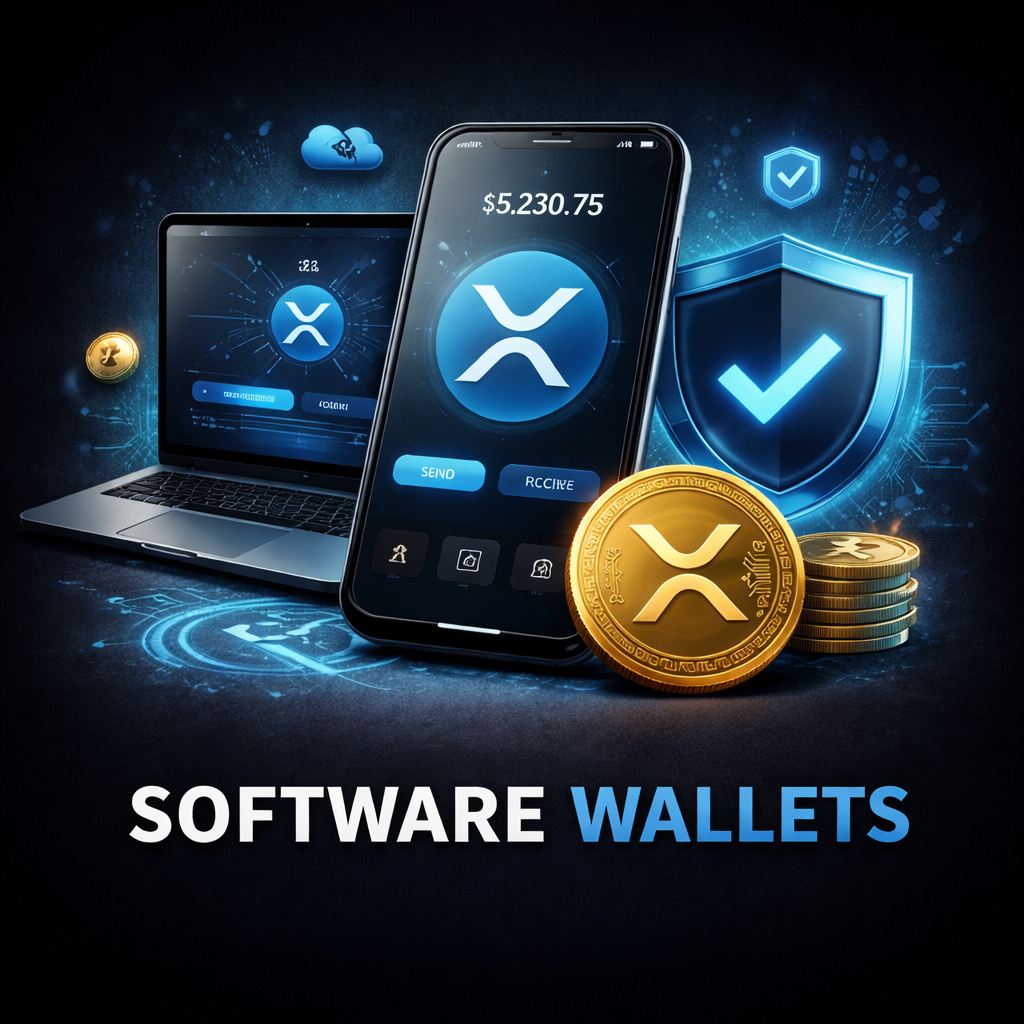
Software wallets keep private keys on your phone or computer, giving direct XRPL access while requiring careful backups and personal security habits.
Examples
- XUMM
- Trust Wallet
- Exodus
- Atomic Wallet
Hardware Wallets (Cold Storage)
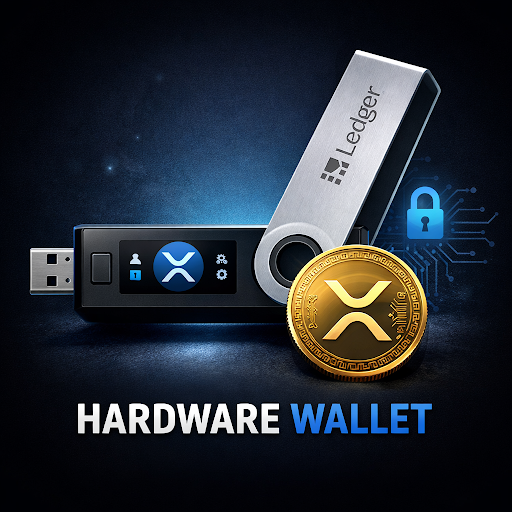
Hardware wallets store private keys offline, limiting online exposure and offering the strongest protection for long term XRP holdings.
Examples
- Ledger
- Trezor
RECOMMENDED: How To Buy XRP In Australia (2026 Guide: Exchanges + Fees)
Tips For Buying XRP Safely & Efficiently
- Always confirm destination tags before sending XRP, and start with a small test transfer.
- Compare total costs, including spreads, deposit fees, and withdrawal fees.
- Use limit orders on order-book exchanges to control execution price.
- For large purchases, request quotes from multiple OTC desks and confirm settlement terms in writing.
- Enable two-factor authentication, set withdrawal whitelists, and move long term holdings to hardware wallets.
- Keep detailed transaction records for tracking, reporting, and account reconciliation.
FAQ
1. What Is A Destination Tag And Why Does It Matter?
A destination tag is a numeric identifier used by exchanges to credit XRP deposits to the correct account. Many exchanges share wallet addresses across users.
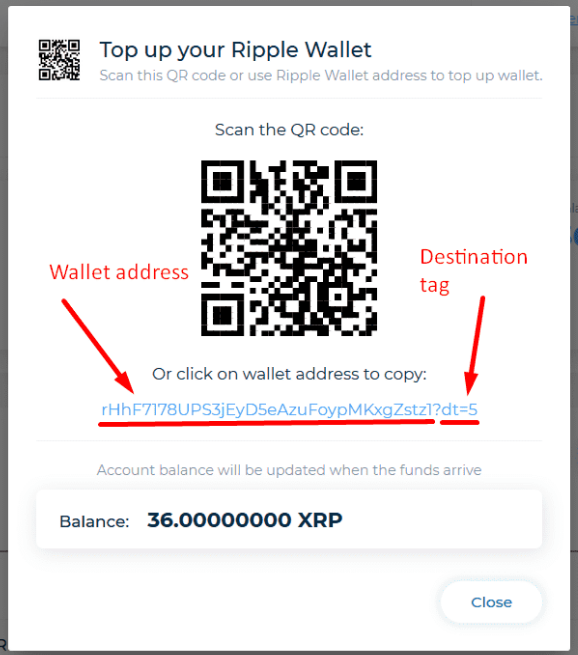
Sending XRP without the correct tag can delay or block crediting. Always copy the exact tag provided by the receiving platform before transferring funds.
2. How Much XRP Do I Need To Activate A New Wallet?
The XRP Ledger requires a small base reserve to activate a new wallet address. Additional reserves may apply if you enable certain account features. This reserve remains locked while the account exists. Wallet apps usually show the current requirement, which can change based on network rules.
3. Should I Keep XRP On An Exchange Or In My Own Wallet?
Exchanges are useful for active trading and quick fiat access. For long term holding, self custody is safer because you control the private keys. Hardware wallets offer the strongest protection by keeping keys offline. Many users combine both, trading on exchanges while storing long term balances in cold storage.
4. How Do I Reduce Fees When Buying XRP?
Use order-book trading with limit orders to avoid paying wide spreads. Bank transfers usually cost less than card purchases. For large transactions, OTC desks can reduce slippage by locking in a fixed price.
5. What Records Should I Keep For Tax Or Accounting Purposes?
Keep trade confirmations, deposit and withdrawal logs, and records of fiat transfers. Note dates, amounts, and fiat values at execution time. Track each wallet address you use. Clear records make reporting easier and help resolve issues if a platform questions a transaction later.
Conclusion
Buying and storing XRP starts with choosing the right access point. Use large exchanges for liquidity, OTC desks for size, and self custody for long term security. Confirm destination tags, test transfers, secure private keys, and compare full costs before committing funds to any transaction.
Should You Invest In XRP Now?
Before you invest in XRP, you’re going to want to read our next premium crypto alert which will be published in the coming days. We will reveal key potential entry points and other crypto assets with explosive potential.
Read our latest alert here: Major Support Being Tested in Crypto – This Is The Point For a Bounce to Develop
Since 2017, InvestingHaven’s blockchain research service has been guiding investors through both bull runs and crypto winters.