Gold prices fell fast after record highs. Forced selling, higher yields, and crowded trades keep the possibility of a further dive alive.
Gold surged to a record high of $5,626.80 per ounce in late January, then reversed sharply.
Prices recently traded around $4,650 per ounce, a drop of roughly 13%, with some sessions showing losses closer to 15%.
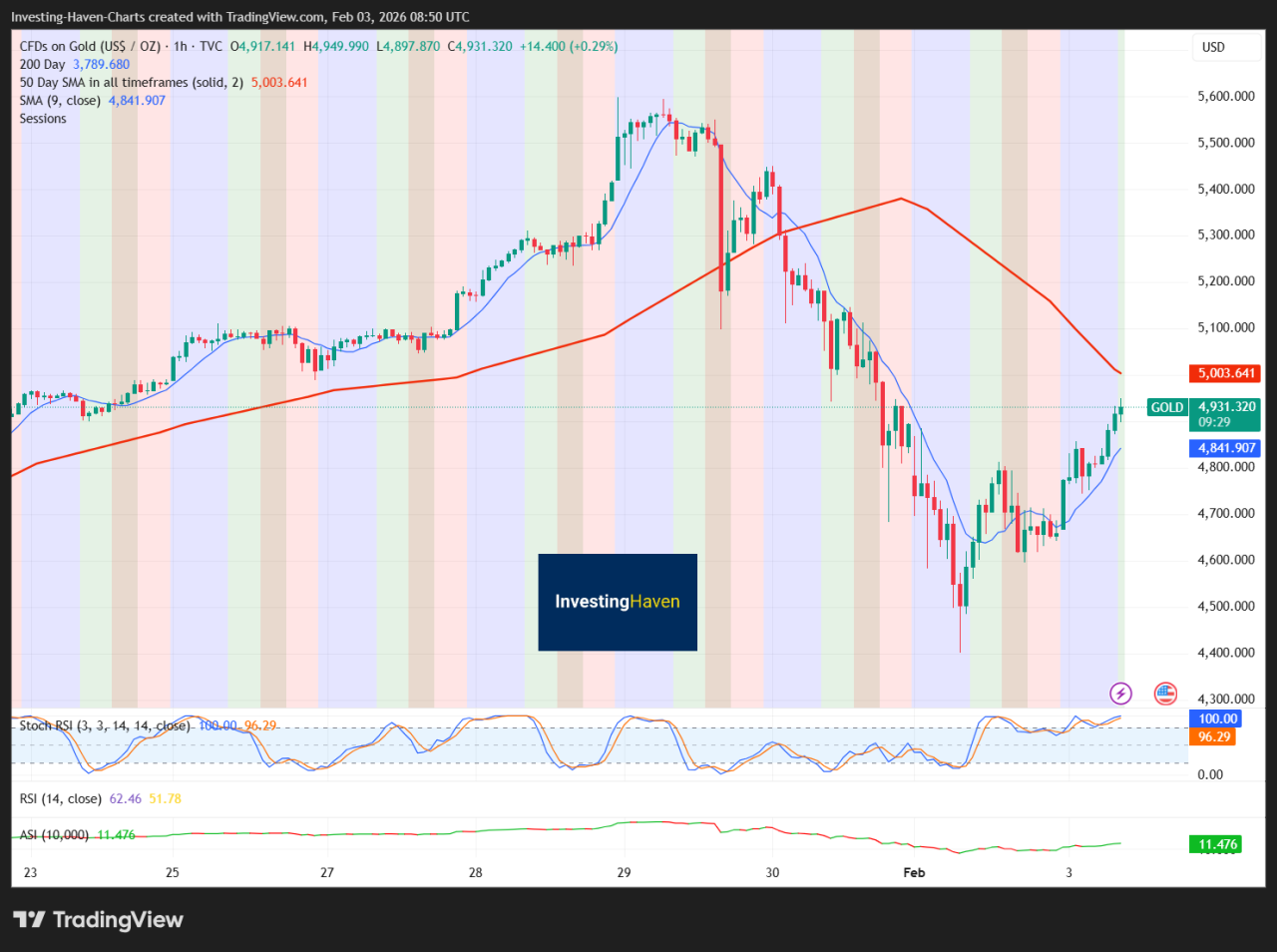
The speed of the decline surprised many traders and exposed how fragile positioning had become.
RECOMMENDED: Gold Drops – Fed Rumor Sends Dollar Roaring – What’s Next?
Forced Selling Is Adding Pressure
One of the main drivers of the sell-off was forced selling. CME increased margin requirements on gold futures, which raised the cost of holding leveraged positions.
Some traders had no choice but to sell.
At the same time, options activity accelerated the downtrend. Earlier call buying led dealers to hedge, and when prices turned lower, those hedges became additional selling.
This created a feedback loop that accelerated losses.
ALSO READ: JP Morgan Says Gold To Hit $6,300 By Year-End: Is Fiat Finished?
Higher Yields Are Weighing On Gold
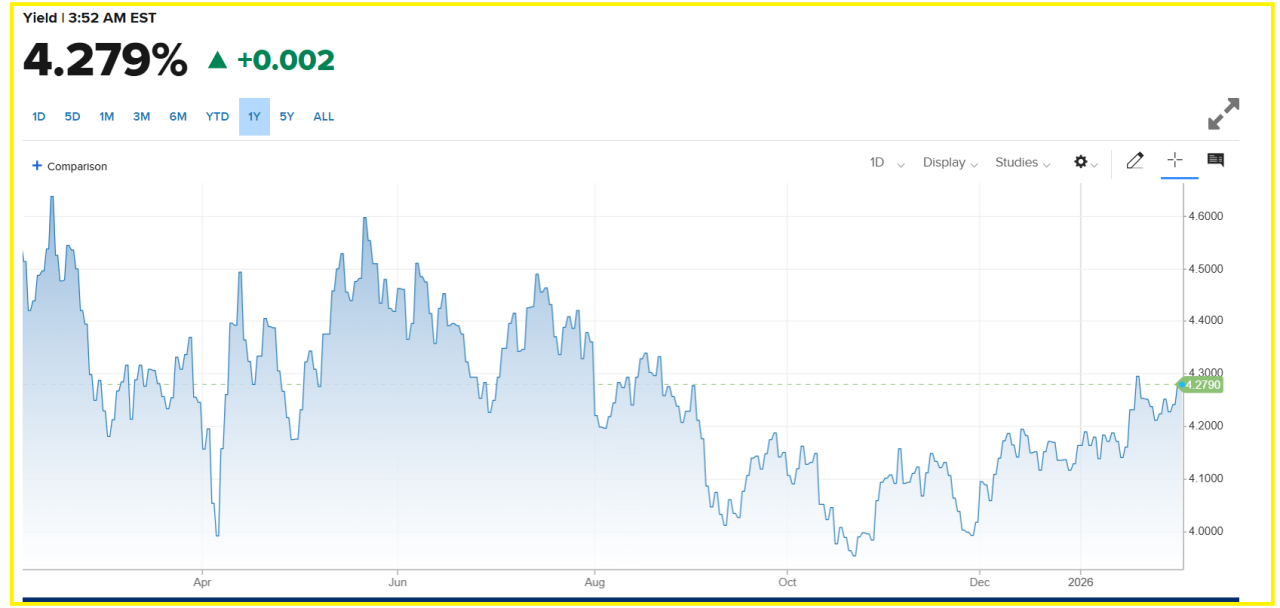
Rising U.S. Treasury yields have also played a key role. The 10-year yield traded around 4.2% to 4.3% during the sell-off, which increased the opportunity cost of holding gold.
A firmer U.S. dollar added more pressure, since gold is priced in dollars and becomes more expensive for global buyers when the dollar strengthens.
Crowded Trades Raise $4,000 Risk
Gold ETFs saw strong inflows earlier in January, showing that many investors were positioned for higher prices.
When sentiment flipped, that crowded positioning made the decline sharper.
If deleveraging continues and yields stay elevated, prices could slide further toward the psychological $4,000 level.
Still, some support exists. Central banks continue to buy gold, and several large institutions expect higher prices over the longer term.
RECOMMENDED: Central Banks Are On A Gold-Buying Stampede In 2026
Conclusion
Gold’s sharp decline shows signs of forced selling, higher yields, and stretched positioning.
A move to $4,000 remains possible if these pressures persist, but ongoing central bank demand could slow the fall.
Should You Invest In Gold Right Now?
Before you invest in Gold, you’re going to want to read our latest Premium Gold & Silver Investing alert. We reveal our outlook for Silver in the short and long term.
We called the rally in Gold long before it happened, and the week before the drop we suggested Gold could be primed for profit taking.
Our premium members were ahead of the curve, not panic buying or selling.