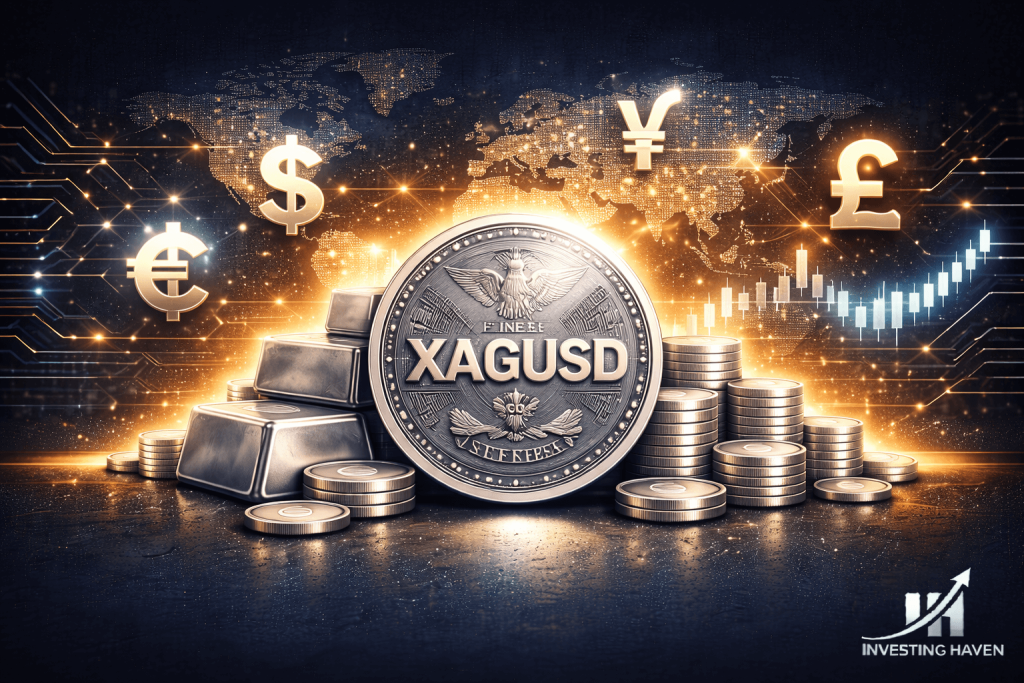
Silver has long been a valuable commodity, serving as both a medium of exchange and a store of wealth. In modern financial markets, XAGUSD represents the price of silver quoted in US dollars, enabling traders and investors to easily track its value. The price of Silver/USD is influenced by factors such as industrial demand, investment interest, economic conditions, and the strength of the US dollar. Understanding how Silver/USD works and what drives its fluctuations is crucial for anyone involved in commodities trading, investment, or market analysis.
What is XAGUSD
XAGUSD is a symbol used in financial markets to represent the value of one troy ounce of silver in US dollars. The “XAG” part comes from the chemical symbol for silver, Ag, while “USD” denotes the US currency in which the price is quoted. This pairing, like other forex pairs, is commonly referred to as a commodity currency pair and is actively monitored by traders and investors worldwide.
Unlike stocks or bonds, Silver/USD does not represent ownership of a company or government debt. Instead, it tracks the market price of a physical commodity, allowing traders to speculate on silver price movements. Investors use Silver/USD to hedge against inflation, diversify portfolios, or take advantage of short-term market fluctuations.
How XAGUSD Prices Are Determined
The price of XAGUSD is determined by a combination of global supply and demand factors. Key influences include:
- Industrial Demand: Silver is widely used in electronics, solar panels, medical equipment, and other industries. Changes in industrial demand directly affect Silver/USD prices.
- Investment Demand: Investors purchase silver for hedging or speculation purposes. Increased interest in silver as an investment often drives Silver/USD higher.
- Global Economic Conditions: Inflation, interest rates, and economic uncertainty affect the value of silver relative to the US dollar. During periods of uncertainty, Silver/USD often rises as investors seek a safe-haven asset.
- US Dollar Strength: Since Silver/USD is quoted in USD, fluctuations in the dollar influence silver prices. A weaker dollar typically boosts Silver/USD, while a stronger dollar can suppress it.
Market participants, including institutional investors, retail traders, and financial institutions, contribute to constant price updates for XAGUSD, creating a dynamic and liquid market.
Historical Trends in XAGUSD
Analyzing historical trends in XAGUSD provides valuable insight into price behavior and potential future movements. Silver has experienced periods of rapid appreciation and sharp declines, often correlating with macroeconomic events such as recessions, inflationary pressures, or geopolitical tensions.
For example, during economic crises, investors often turn to precious metals like silver, pushing XAGUSD higher. Conversely, when global markets are stable and the US dollar strengthens, silver prices may decline. Understanding these patterns helps traders make informed decisions based on historical data.
Technical Analysis of XAGUSD
Technical analysis is a popular method used by traders to interpret XAGUSD price movements. By examining charts and price patterns, analysts can identify potential entry and exit points. Common tools include:
- Support and Resistance Levels: These indicate price points where XAGUSD historically tends to reverse or consolidate.
- Moving Averages: Traders use moving averages to identify trends and smooth out price fluctuations in XAGUSD.
- Candlestick Patterns: Candlestick charts visually represent price movements and help detect bullish or bearish trends in XAGUSD.
- Volume Analysis: High trading volume often confirms the strength of a price movement in XAGUSD, while low volume may signal potential reversals.
Technical analysis does not guarantee outcomes but provides a structured approach to understanding market behavior.
Fundamental Factors Affecting XAGUSD
While technical analysis focuses on historical price data, fundamental analysis examines underlying economic and financial factors that influence XAGUSD. Key considerations include:
- Monetary Policy: Central bank decisions, interest rate changes, and quantitative easing impact XAGUSD. Lower interest rates tend to support higher silver prices.
- Inflation and Currency Values: Rising inflation often increases demand for silver as a hedge, which can positively affect XAGUSD.
- Geopolitical Events: Conflicts, trade tensions, or sanctions can drive investors to precious metals, influencing XAGUSD.
- Supply Factors: Mining output and silver recycling rates also affect market supply and, therefore, the XAGUSD price.
Investors often combine technical and fundamental analyses to form a complete understanding of XAGUSD and market trends.
Strategies for Monitoring XAGUSD
To effectively track XAGUSD, investors use real-time charts, historical data, and market analysis. Some common strategies include:
- Watching Economic Indicators: Reports such as US inflation, GDP growth, and industrial production impact XAGUSD.
- Tracking Dollar Strength: Movements in the USD directly affect silver prices. Tools like the US Dollar Index can provide insight into potential XAGUSD trends.
- Setting Alerts and Risk Limits: Monitoring price levels and establishing stop-loss or take-profit points help manage risk in XAGUSD trading.
- Diversifying Analysis: Combining global news, technical charts, and market sentiment ensures a balanced perspective on XAGUSD.
Staying informed and disciplined is critical for navigating the volatility of silver markets.
Importance of XAGUSD in Investment Portfolios
XAGUSD plays a significant role in portfolio diversification. As a tangible asset, silver can reduce overall portfolio risk and hedge against inflation. Investors often allocate a portion of their assets to XAGUSD or other precious metals to maintain balance during periods of market uncertainty.
Moreover, silver’s liquidity and global recognition make XAGUSD an accessible option for both individual and institutional investors. Whether for long-term investment or short-term trading, understanding XAGUSD helps participants make informed decisions in the commodities market.
Risks and Considerations
While XAGUSD offers investment opportunities, it also comes with risks:
- Price Volatility: Silver prices can change rapidly in response to global economic events, affecting XAGUSD positions.
- Leverage Risk: Trading XAGUSD through derivatives or contracts for differences can magnify gains but also increase potential losses.
- Market Speculation: Speculative trading can create short-term price swings in XAGUSD.
Managing risk through careful analysis and strategy is essential for anyone engaging with XAGUSD.
Conclusion
Understanding XAGUSD involves analyzing both market dynamics and the factors that influence silver prices in US dollars. By studying historical trends, technical patterns, and fundamental economic indicators, investors can gain insights into this important commodity pair. XAGUSD provides a window into global silver markets, offering opportunities for hedging, speculation, and portfolio diversification.
With careful monitoring and disciplined analysis, participants can better navigate silver price fluctuations and make informed decisions based on market movements. Whether for investment, trading, or economic study, understanding XAGUSD is crucial for anyone interested in precious metals and global financial markets.