



KEY TAKEAWAYS
- U.S. Treasury officials confirmed there will be no taxpayer-funded support for Bitcoin during market sell-offs.
- Billions of dollars in leveraged positions were liquidated over several days, accelerating the price drop.
- U.S. spot Bitcoin ETFs recorded sizable net outflows, weakening an important source of demand.
- With no policy backstop, price direction now depends on liquidity, leverage, and investor confidence.
- Should you invest $1,000 in Bitcoin now?
Bitcoin dropped sharply as Washington ruled out any rescue, triggering heavy liquidations and fresh ETF outflows that exposed weak market support.
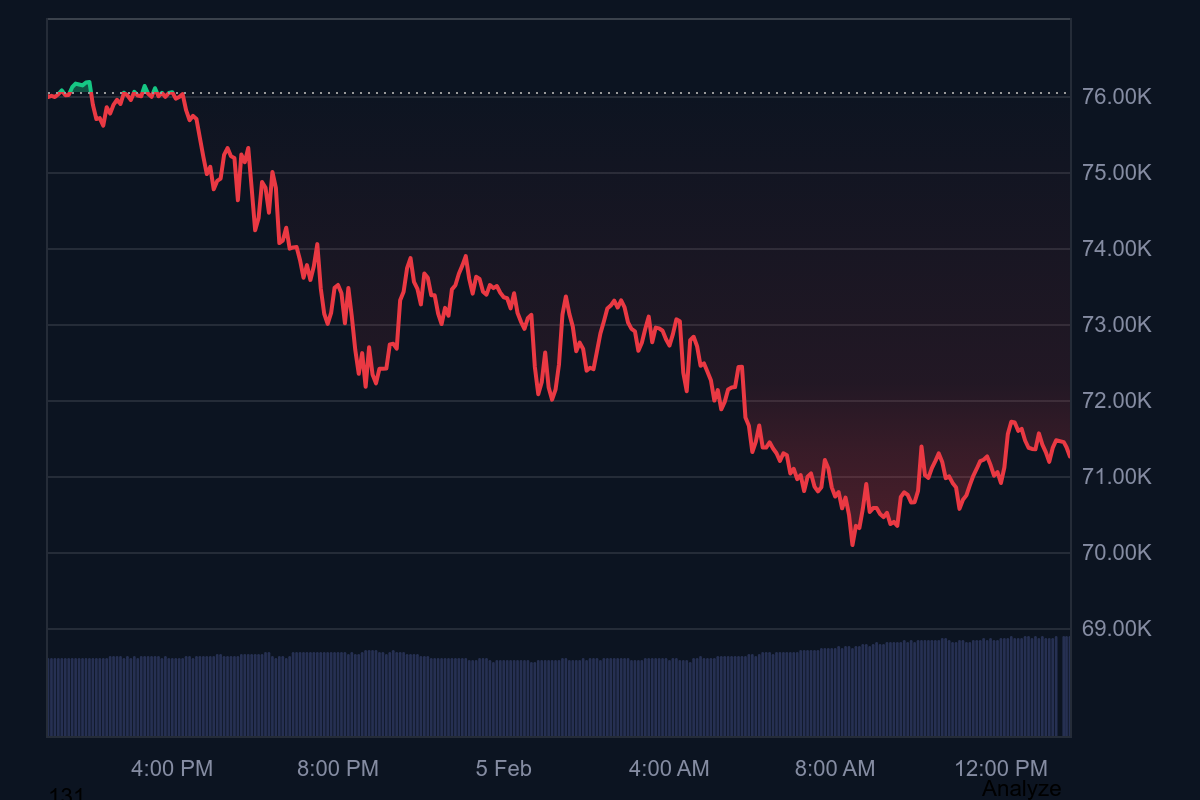
Bitcoin is trading around 65548.16 it fell hard this week, dropping below $68,000 during global trading hours and rattling investors across crypto markets.
The tumble wiped out leveraged bets at speed, drained liquidity from key price levels, and pushed U.S. spot Bitcoin ETFs into fresh outflows.
At the same time, a message from U.S. Treasury Secretary Scott Bessent removed any hope of a government safety net, leaving the market to absorb the shock on its own.
RECOMMENDED: Why Did Bitcoin Crash? – The Secret Trigger Most Traders Missed
Washington Draws A Hard Line
Recent testimony from the U.S. Treasury secretary removed doubts about government support for crypto markets.
Lawmakers asked whether Washington would step in if Bitcoin collapsed. The answer was direct. The Treasury does not have the legal authority, nor the intention, to buy Bitcoin or support its price using public funds.
Officials also addressed confusion around Bitcoin held by the U.S. government. These coins come from law enforcement seizures, not market purchases.
Holding seized assets does not mean the government can or will deploy them to stabilize prices. Selling or buying Bitcoin for market support would face serious legal barriers and political resistance.
During past financial crises, markets often assumed authorities would act as a last resort. Bitcoin no longer carries that assumption. The message from Washington was simple and firm: crypto investors are on their own.
ALSO READ: Week Ahead: Can Bitcoin (BTC) Hold Key Support?
What The Market Data Shows
The market reacted swiftly to this news. Bitcoin fell more than 7% in a single day.
Selling pressure intensified as leveraged traders were forced out of positions.
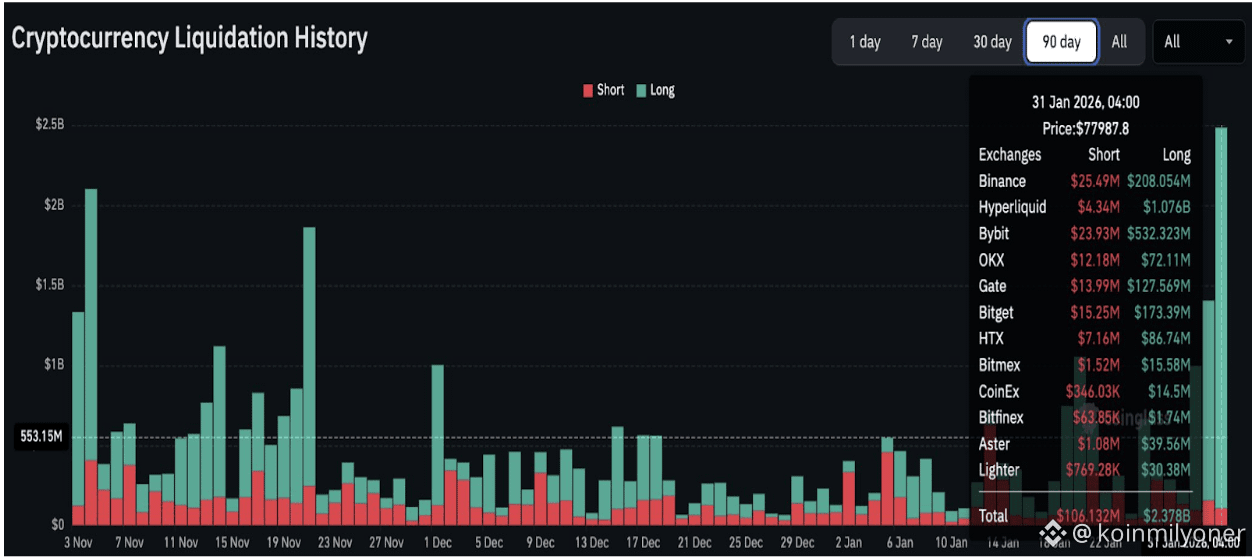
Data from derivatives trackers shows that roughly $2.5 billion worth of crypto positions were liquidated over several days.
Many of these were long positions that collapsed once key support levels broke. Forced selling added momentum to the decline, pushing prices lower faster than spot selling alone would have.
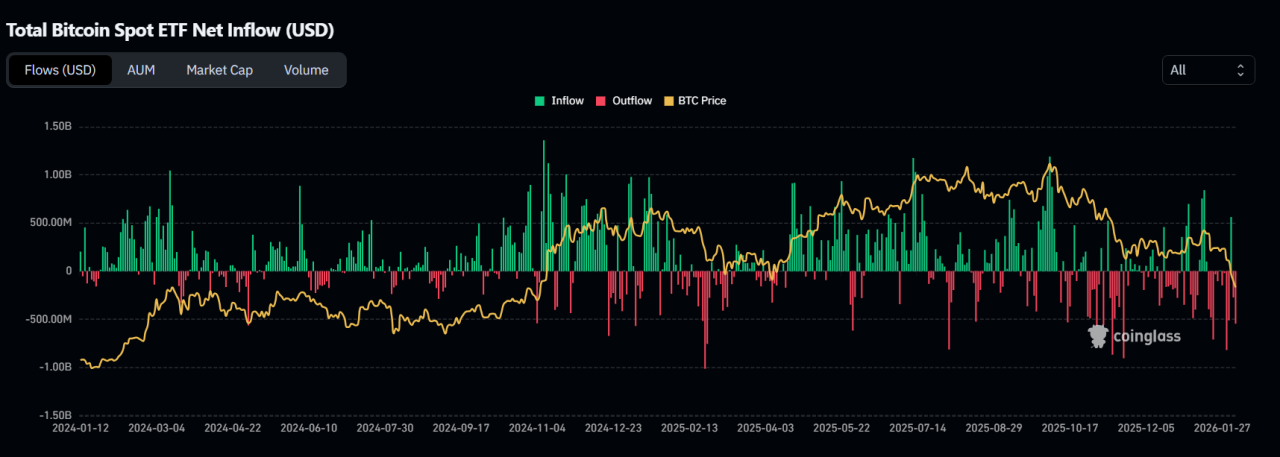
At the same time, U.S. spot Bitcoin ETFs posted net outflows of about $272 million in one session.
That pushed total ETF assets below $100 billion. These funds had acted as steady buyers during earlier market rallies. When money flows out instead of in, prices feel the impact quickly.
Together, falling prices, forced liquidations, and ETF outflows came together to push BTC’s price lower.
Lower prices triggered liquidations. Liquidations added selling pressure. ETF outflows removed a major source of demand.
RECOMMENDED: Metals Meltdown Sends Bitcoin To A 10-Month Low – What’s Next?
Why A Bailout Was Never Likely
Even before this week’s statements, a Bitcoin bailout faced steep obstacles. U.S. law limits how the Treasury can deploy public money, especially when it comes to buying private assets.
Unlike banks during a crisis, Bitcoin has no direct role in payment systems or credit markets that would justify emergency support.
There is also a practical problem. Bitcoin trades globally, across hundreds of exchanges, with uneven liquidity.
Any attempt by a government buyer to stabilize prices could fail or backfire, triggering speculation and legal challenges instead of calm.
Politics also plays a role. Using taxpayer funds to support a volatile digital asset would spark intense backlash. That reality makes policy intervention highly unlikely, even during sharp market drops.
What To Watch Now
With policy risk removed, you should now focus on a few signals:
- Liquidation data shows whether forced selling is slowing or accelerating.
- ETF flows reveal whether institutional demand is returning or stepping aside.
- Technical levels around $70,000 and below act as tests of market confidence, especially during thin trading hours.
You should also pay close attention to large corporate Bitcoin holders such as Strategy.
Any major disclosure involving treasury sales or balance sheet stress could move prices quickly in either direction.
YOU MIGHT LIKE: Dubai Now Lets You Pay Car Insurance With Bitcoin
Conclusion
Bitcoin might not be finished, but investors are a little hopeless now. Washington has stepped aside, leaving the market to stand on its own.
Without a government backstop, price swings can grow sharper and faster, especially when leverage and liquidity team up.
Should You Invest $1,000 In Bitcoin Now?
Before you invest, you’re going to want to read our next premium crypto alert which will be published in the coming days. We will reveal key crypto assets to consider in 2026 with explosive potential.
Read our latest alert here: Major Support Being Tested in Crypto – This Is The Point For a Bounce to Develop
Since 2017, InvestingHaven’s blockchain research service has been guiding investors through both bull runs and crypto winters.
Best Crypto Exchange for Intermediate Traders and Investors

Invest in cryptocurrencies and 3,000+ other assets including stocks and precious metals.
0% commission on stocks - buy in bulk or just a fraction from as little as $10. Other fees apply. For more information, visit etoro.com/trading/fees.
Copy top-performing traders in real time, automatically.
eToro USA is registered with FINRA for securities trading.

30+ million
Users worldwide