



KEY TAKEAWAYS
- Morgan Stanley’s ETF plan includes staking rewards, adding yield to ETH exposure.
- A bank-backed ETF opens Ethereum to a wider pool of institutional investors.
- Approval timing and early inflows will influence ETH’s market direction in 2026.
Morgan Stanley’s spot Ethereum ETF filing adds staking income to traditional price exposure.
This move expands institutional access and changes how large investors may hold ETH.
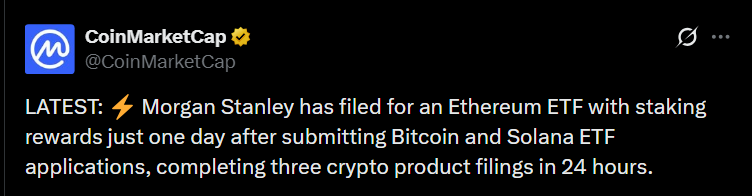
On Jan 8, 2026, Morgan Stanley submitted a filing for a spot Ethereum Trust that plans to distribute staking rewards to investors.
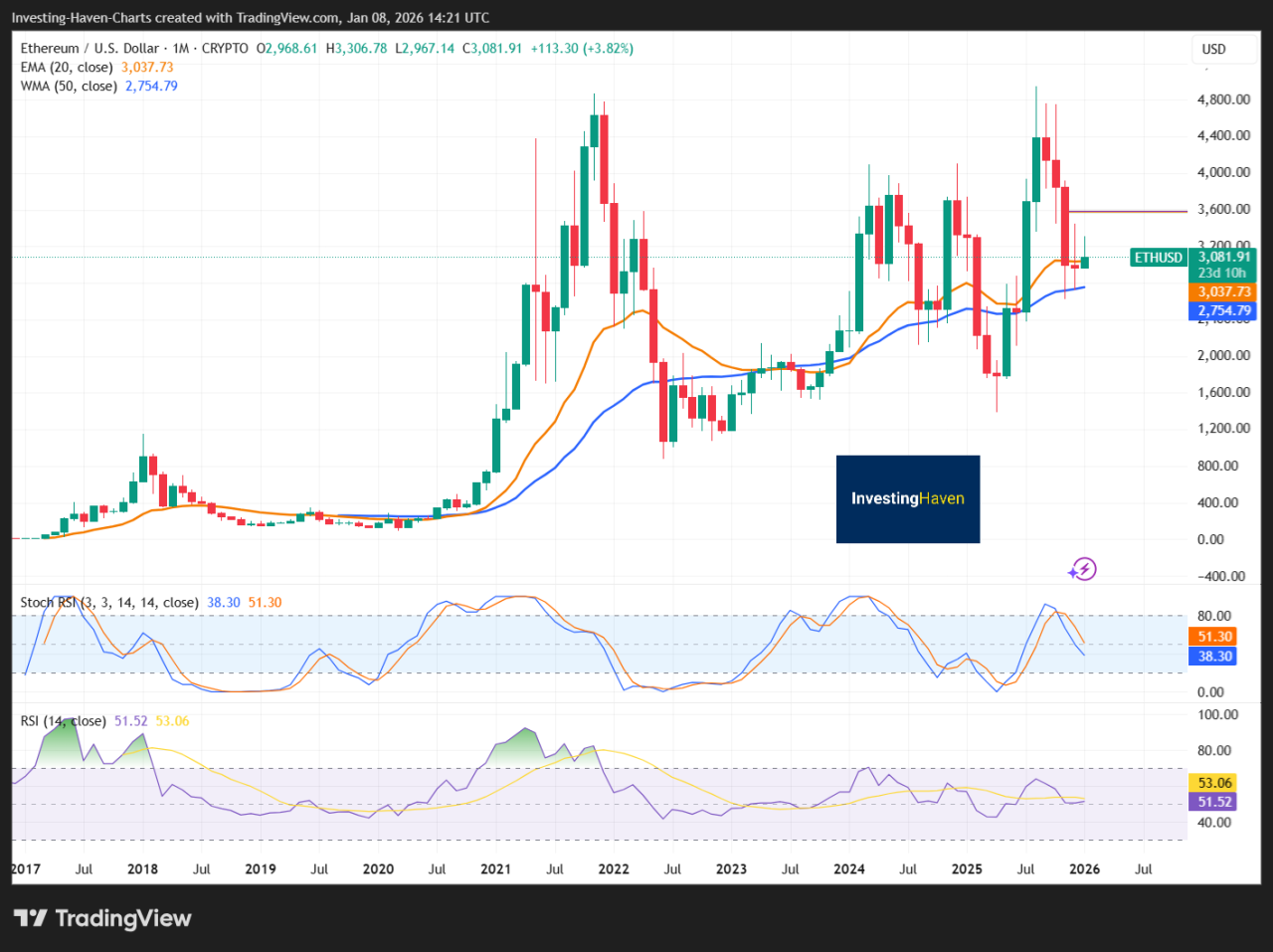
Ethereum traded around $3,000 at the time, while trading volumes showed mild increases across major exchanges.
The filing places ETH deeper inside traditional finance structures that manage trillions of dollars.
RELATED: BTC Rallies Today as Markets React to Morgan Stanley’s Spot Bitcoin ETF Filing
What Morgan Stanley Filed And Why It Matters
The filing outlines a spot Ethereum Trust designed to track ETH’s market price while passing staking rewards to shareholders.
Unlike futures-based products, this structure holds actual ETH.
The trust plans to use third-party staking providers and regulated custodians, following the same framework used in commodity-style ETFs.
This is important because it blends two core ETH features into one product: price exposure and network yield.
For institutions, this removes the need to manage wallets, validators, or technical staking processes.
The filing also confirms fee structures and redemption rules that match what large investors already understand, lowering adoption barriers.
RECOMMENDED: Bitcoin vs. Ethereum: Which Is Actually Driving Institutional Flows in Early-2026?
How The Market Is Reacting So Far
Ethereum’s price stayed relatively stable after the filing, suggesting investors viewed it as a confirmation of a growing trend rather than a sudden catalyst.
Similar crypto ETFs have attracted first-week inflows above $1B, showing how quickly institutional capital can move once products receive approval.
A Morgan Stanley-backed ETF carries strong distribution power.
Large wealth managers, retirement platforms, and corporate treasuries often prefer bank-sponsored products.
If approved, even modest allocation shifts could translate into sustained ETH demand over time rather than short-term spikes.
What This Means For ETH Investors In 2026
For investors, staking rewards add an income layer, but ETF structures limit redemption flexibility compared to holding ETH directly.
On the positive side, bank custody reduces operational risk and simplifies compliance for institutions.
The main variable remains regulatory approval speed and how staking rewards are handled in final documents.
RECOMMENDED: Who Owns The Most Ethereum (ETH)? Revealed
Conclusion
Morgan Stanley’s spot ETH ETF filing pushes Ethereum further into mainstream finance.
Approval timing, staking mechanics, and early inflows will help define ETH’s institutional role in 2026.
In this week’s Premium Crypto Alert, we will be covering Ethereum in detail to identify key opportunities along with a cryptocurrency that we believe has 10x potential for 2026
Join eToro today and receive $10 in free crypto on your first deposit. Trade crypto, stocks, and ETFs with powerful tools and social investing features like CopyTrader™
Crypto investments are risky and may not suit retail investors; you could lose your entire investment. Understand the risks here