


KEY TAKEAWAYS
- Retail investors added about $922 million to silver ETFs in one month, concentrating market exposure.
- Silver prices climbed above $90/oz after rising roughly 200% over the past year.
- Physical silver demand weakened as U.S. coin dealers saw more sellers than buyers.
Retail money flooded silver ETFs at a record pace.
Prices pushed above $90 as speculation overtook physical demand signals.
In just 30 days, retail investors added about $922 million to silver exchange-traded funds.
That surge helped lift silver prices above $90 an ounce and capped a rally of roughly 200% over the past year.
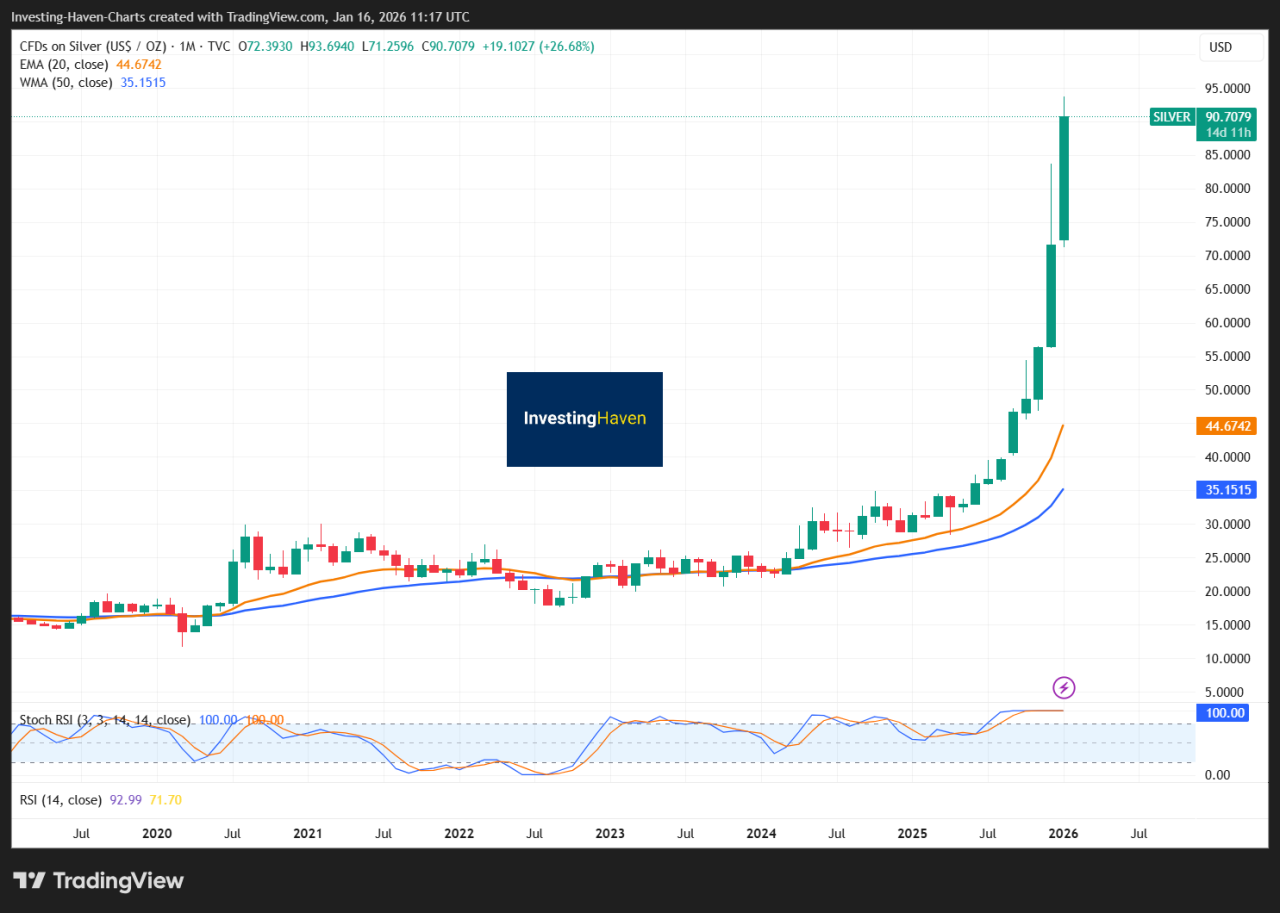
The speed and size of these inflows have turned silver into one of the most crowded trades in global commodities, with positioning now heavily tilted toward short-term momentum.
Why Retail Money Is Rushing Into Silver
Easy access through ETFs made silver simple to buy at scale.
Many investors saw the metal as a hedge against falling real yields and currency risk, while others chased momentum after prices broke multi-year highs.
Large ETF inflows forced funds and market makers to add silver exposure, reinforcing price moves.
Industrial demand from solar panels and electronics continues to support long-term use, but at current price levels, some buyers are delaying purchases.
That gap leaves financial demand as the main force behind recent gains.
RECOMMENDED: Week Ahead: Gold And Silver At A Critical Turning Point
ETF Boom Versus Physical Market Reality
While ETF holdings surged, the physical market was taking a different direction.
U.S. coin dealers reported more customers selling silver than buying it, an unusual signal during a strong rally.
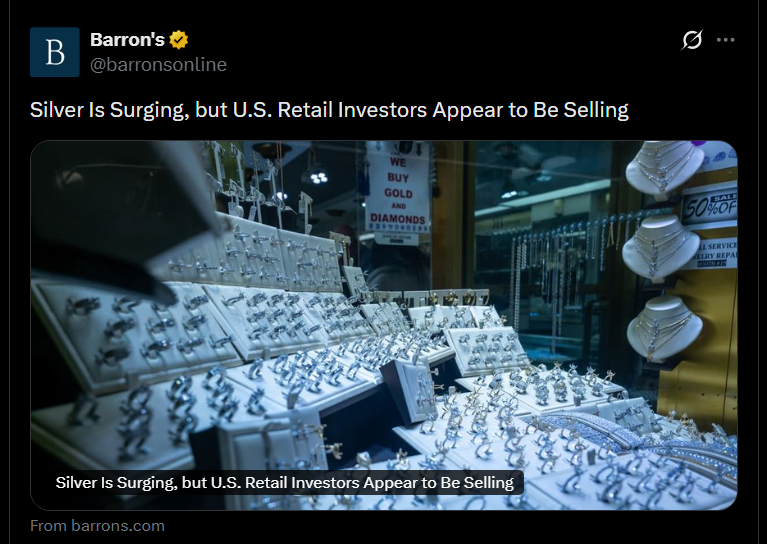
High prices encouraged profit-taking, especially among long-time holders.
At the same time, limited dealer inventories and rising ETF concentration increased sensitivity to shifts in sentiment.
When ownership clusters this tightly, even small changes in flows can move prices quickly.
ALSO READ: How Clean-Tech Demand Is Shaping Silver Prices
Conclusion
Silver’s rally now rests on continued ETF demand. If inflows slow or reverse, prices could react fast due to thin physical buffers and heavy speculative positioning.
The metal still benefits from long-term industrial use, but near-term price action depends on investor behaviour more than supply shortages.
The current setup rewards attention to ETF flows, physical sales trends, and rate expectations, which often signal turning points before prices respond.
Before you invest in Silver, Our next Premium Silver & Precious Metals alerts will be published in the next few days, we will reveal some key assets to consider for 2026 and what our take on Silver is, this is one not to miss.